

God’s Small Wonders: Spotting the Red-Bellied Woodpeckers

God’s Small Wonders Series: The Window Visitor That Stole My Heart

Table of Contents
Introduction

Welcome to my new series, God’s Small Wonders! Through this series, I want to pause, look out the window, and celebrate the incredible artistry, design, and joy that God embeds into the everyday pieces of our world.
Just this morning—as I was working in my attic studio—I received the most beautiful, unexpected gift outside my window. God in Christ Jesus sent a spectacular visitor to remind me of His presence, and I could not wait to share it with all of my fellow bird fans!
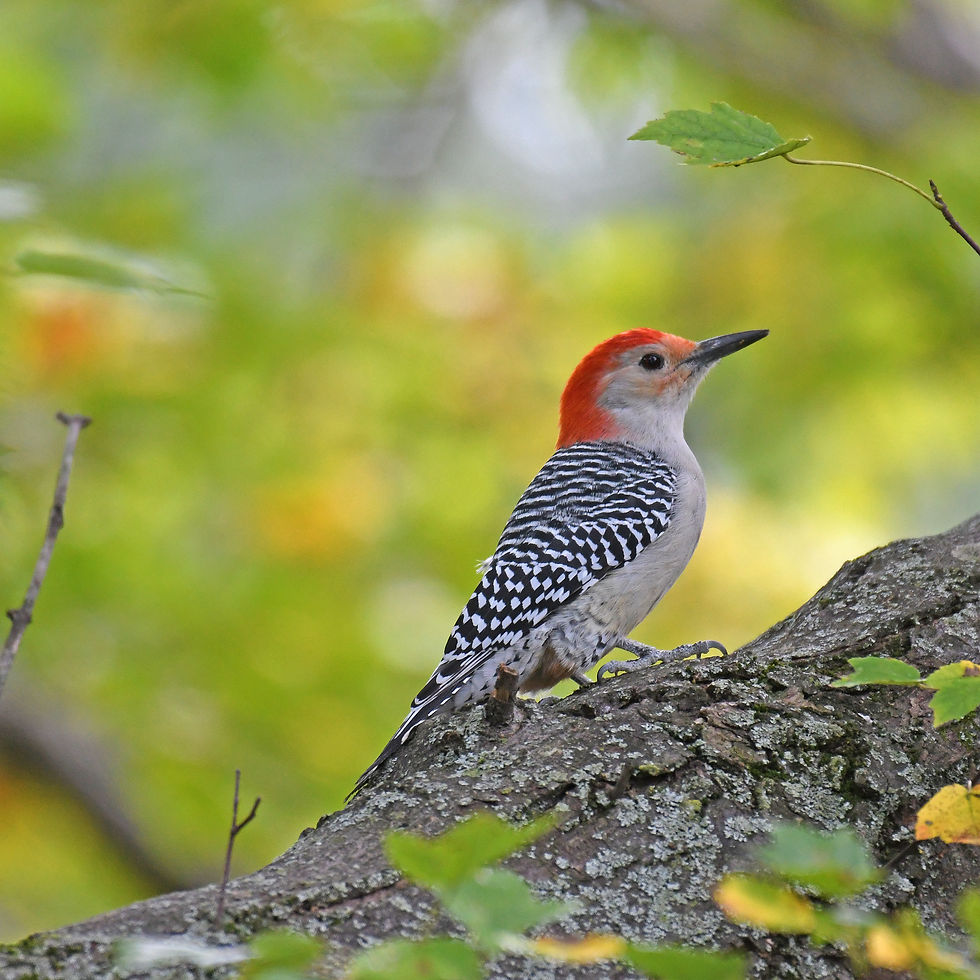
Perched right there on the side of my home was a breathtaking Red-bellied Woodpecker.
If you have ever seen one up close, you know exactly how striking they are. They have this marvelous, zebra-striped pattern of black and white feathers down their back that looks like fine tapestry. And then, right on the back of their head, a brilliant splash of fiery red that perfectly catches the morning light.
But here is the fun little mystery about these beautiful birds: despite being named the “Red-bellied” woodpecker, you rarely actually see any red on their belly! It is usually just a faint, soft rose blush hidden right against the tree trunk as they climb. Instead, what grabs your attention is their bold personality, their sharp eyes, and the rhythmic, steady tapping as they search the tree bark.
Watching this tiny creation outside my glass pane felt like a gentle whisper from above—a reminder that the same Creator who paints the vast morning skies also takes the time to intricately design the feathers of a backyard bird, directing its steps right to your windows when we need a smile.
A Steadfast Neighbor: Year-Round Migration Habits
One of the most comforting things about the Red-bellied Woodpecker is that once they choose a neighborhood, they stick around. Unlike many birds that flee south when the weather turns cold, Red-bellied Woodpeckers are non-migratory, year-round residents throughout the entirety of their eastern United States range (Cornell Lab of Ornithology, n.d.; University of Maryland Extension, n.d.). They establish a personal home territory and actively defend it through all four seasons (Massachusetts Animals, n.d.). This means the beautiful visitor outside my window today is not passing through—he is a permanent neighbor we can enjoy even in the dead of winter!
Love on the Bark: Mating and Nesting Rituals

When spring arrives, these woodpeckers engage in a beautiful, cooperative courtship. To catch the eye of a female, the male will loudly drum his bill against hollow wood near a potential nesting site (Florida Fish and Wildlife Conservation Commission, n.d.). Once a female shows interest, the pair engages in a sweet ritual of mutual tapping on the bark to solidify their bond (Canada Wild Birding, 2024).
Together, they work as a team to excavate a deep nest cavity inside a dead tree trunk or live limb, where the female eventually lays 4 to 5 glossy white eggs directly onto a soft bed of leftover wood chips (Cornell Lab of Ornithology, n.d.; Holden Arboretum, n.d.). Both the mother and father take turns incubating the eggs and feeding their young, demonstrating a beautiful picture of shared parental care in nature (Florida Fish and Wildlife Conservation Commission, n.d.; Holden Arboretum, n.d.).
Welcoming the Wonder: How to Attract a Red-Bellied Woodpecker to Your Yard

If you want to experience this joy outside your own window, you can easily invite them over with the right menu. Red-bellied Woodpeckers are omnivorous multitaskers; while they forage for tree insects in the summer, they rely heavily on plant matter, seeds, and nuts during the colder months. (Cornell Lab of Ornithology, n.d.).
To attract them to your backyard, the single best treat you can offer is high-quality suet, suet blends, or high-energy bark butter (Wild Birds Unlimited, n.d.). They are also incredibly fond of whole peanuts, tree nuts, and striped sunflower seeds offered in sturdy tray or large tube feeders (Perky-Pet, n.d.: YouTube, 2021). Because they are larger birds, providing a feeder with a “tall prop” or a wide platform allows them to brace themselves comfortably while they eat, making your yard their absolute favorite dining destination.
Have you spotted any of God’s small wonders in your backyard or outside your window this week? If not, keep your eyes open, your feeders full, and your hearts ready for God’s next little blessing in Christ Jesus our Lord!
Happy birding!
References
Canada Wild Birding. (2024, April 12). Red-bellied woodpecker mating and nesting habits. Facebook.
Cornell Lab of Ornithology. (n.d.). Red-bellied woodpecker life history. All About Birds.
Florida Fish and Wildlife Conservation Commission. (n.d.). Red-bellied woodpecker.
Holden Arboretum. (n.d.). Red-bellied woodpecker.
Massachusetts Animals. (n.d.). Red-bellied woodpecker. Southborough, MA.
Perky-Pet. (n.d.). Different woodpecker species and how to attract them.
University of Maryland Extension. (n.d.). Woodland wildlife spotlight. Red-bellied woodpecker.
Wild Birds Unlimited. (n.d.). Attracting red-bellied woodpeckers to your backyard. Barrie, Ontario.
YouTube. (2021, August 1). How to attract red-bellied woodpeckers—basic tips.
About the Author
Welcome! I am a passionate nature lover who recently fell head over heels for the incredible world of avian wonders. Captivated by the vibrant colors, unique behaviors, and gentle melodies of God's beautiful birds through Christ Jesus, I created this space to share that joy with you!
Through weekly stories, observations, and deep dives into different species, I hope to inspire you to pause, look up, and appreciate the magnificent feathered creatures all around us. Join me every week as we explore the skies and God's small wonders together!


Comments