

Beyond the Steel: The Forgotten Faces and Untold Heroism Aboard The Titanic

How Passengers Like Engineer Joseph Laroche and the Ship's Crew Defined True Sacrifice on a Night of Absolute Tragedy

The RMS Titanic was hailed as a marvel of Edwardian engineering - a floating palace of steel deemed unsinkable. Yet, in the early morning hours of April 15, 1912, that pride turned to tragedy in just two hours and forty minutes, when the world's most famous "unsinkable" ship vanished beneath the icy waters of the North Atlantic, taking more than 1,500 lives with it.
More than a century later, the rust-eaten ghost ship, resting two and a half miles beneath the ocean, still commands our attention, proving that while the ship itself could be broken, our collective fascination with its story remains entirely indestructible.
The wreckage serves as a haunting monument to both human error and the fragile lives lost to the deep.
The Flaws in the Framework: Why the "Unsinkable" Ship Sank So Quickly

At the heart of the tragedy lay a series of fatal engineering choices and material vulnerabilities that doomed the ship from the moment of impact. While advertised as practically unsinkable, the Titanic possessed critical structural weaknesses that accelerated its demise:
The "Ice-Cube Tray" Bulkheads: The ship's lower section was divided into 16 major compartments designed to seal off flooding. However, a critical design compromise to accommodate elite spaces left the low-positioned transverse walls (bulkheads) open at the top (YouTube, 2026b). When the iceberg punctured five adjacent compartments, the water's weight pulled the bow forward. As the front of the ship dipped, water spilled over the top of one bulkhead into the next like water filling an ice-cube tray, making progressive flooding unstoppable.
Brittle Steel Hull: Metallurgical analysis of the hull plates later revealed that the steel contained a high concentration of sulfur and low manganese (YouTube, 2025). When exposed to the freezing temperatures of the North Atlantic, the steel underwent a "ductile-to-brittle transition" (Illinois, 2019). Instead of bending or denting upon impact, the frozen high-sulfur steel shattered like glass, tearing open broad paths for the sea (YouTube, 2026b).
Flawed Wrought Iron Rivets: To hold the hull together, builders used over three million rivets (NIST, 2017). Because high-quality steel rivets were in short supply, builders drove lower-quality wrought iron rivets with high levels of slag impurities by hand in the curved sections of the bow and stern (YouTube, 2025). When the iceberg grazed the ship, the immense pressure caused these brittle iron fasteners to instantly snap and shear off, unzipping the hull seams and letting the ocean rush in (NIST, 2017; YouTube, 2026b).
Faces of the Deep: Heartbreak and Heroism Aboard the Titanic
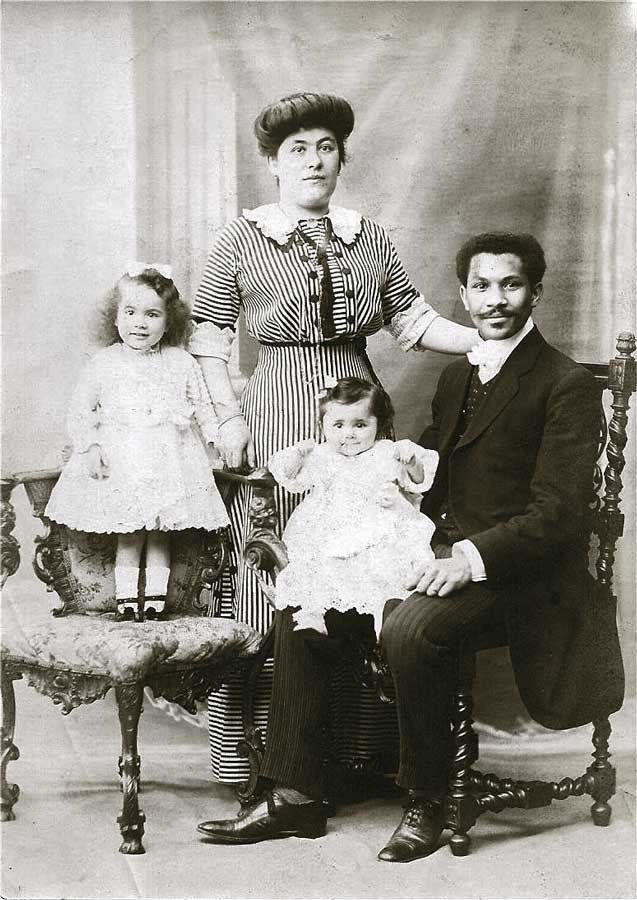
Behind the cold calculations of twisted steel and failing rivets were the terrifying choices faced by the souls trapped on the listing ship. As the reality of the sinking set in, the Titanic became a stage for unimaginable heartbreak, class disparity, and profound self-sacrifice:
The Quiet Dignity of Joseph Laroche: For decades, history overlooked the story of the only known black passenger aboard the ship. Joseph Philippe Lemercier Laroche was a brilliant, French-educated Haitian engineer (Encyclopedia Titanica, 2026). Despite his credentials - having worked on the Paris Metro line - severe racial discrimination in France kept him from earning a fair wage to support his family (Friends of Titanic Memorial Park, 2022). Seeking a better life, he decided to move back to Haiti with his pregnant French wife, Juliette, and their two young daughters. To ensure they could dine together as a family, which was banned for children in first class, they booked passage on the Titanic in second class (Friends of Titanic Memorial Park, 2022). Aboard the ship, the family endured cold stares and overt prejudice from passengers and crew alike. When disaster struck, Joseph focused entirely on protecting his family. He wrapped his coat around Juliette, handed her his valuables, and safely navigated them into a lifeboat (YouTube, 2026a). He stayed behind on the sinking deck and perished; his body was never recovered (Encyclopedia Titanica, 2026).
The Tragedy of the Straus Devotion: Isidor Straus, the wealthy co-owner of Macy's department store, and his wife, Ida, refused to be separated. When Ida was offered a seat in a lifeboat, she stepped back, handed her fur coat to her maid, and told her husband, "We have lived together for many years. Where you go, I go." They were last seen sitting together on deck chairs, holding hands as a wave washed over them.
The Locked Gates of Third Class: Passengers in the lower decks faced a logistical nightmare. Because of strict immigration laws and a labyrinthine ship layout, many steerage passengers found their path to the boat deck blocked by locked iron gates. While over 60% of first-class passengers survived, less than 25% of third-class passengers made it out alive, leaving hundreds of families trapped in the belly of the ship.
The Silent Sacrifice of the Engineers: Chief Engineer Joseph Bell and his crew of 34 engineers, electricians, and firemen knew the ship was doomed. Yet, they voluntarily stayed at their posts in the sweltering, flooding boiler rooms until the final minutes. Their choice to keep the dynamos running ensured the ship had electricity and distress lights, allowing lifeboats to launch and saving hundreds of lives at the cost of their own.
The Musicians Who Played to the End: Bandleader Wallace Hartley and his seven fellow musicians set up their instruments on the boat deck to calm the panicking crowd. They played upbeat ragtime music and hymns for hours as the deck tilted beneath them. None of the band members survived; they played until the ocean finally silenced them.
A Staggering Shortage: The Outdated Lifeboat Regulations

Perhaps the most frustrating paradox of the disaster is that the Titanic did not break any laws regarding its lifeboat capacity. In fact, it legally exceeded them. The staggering shortage of lifeboats was the result of a massive regulatory failure by the British Board of Trade, whose frameworks had failed to keep pace with rapid advancements in shipbuilding (CNN, 2023).
The Outdated 1894 Tonnage Rule: At the time of the sinking, British maritime law was governed by the Merchant Shipping Act of 1894 (Titanic Inquiry Project, 2020). Under these rules, lifeboat requirements were calculated based on the ship's gross tonnage (volume) rather than the actual number of passengers on board (CNN, 2023).
The 10,000-Ton Ceiling: The Board of Trade's regulatory table completely stopped scaling once a vessel reached "10,000 tons and upwards" (Titanic Inquiry Project, 2020). According to this law, any ship exceeding that weight limit was only required to carry 16 lifeboats.
A Scale Mismatch: When the law was written in 1894, the largest passenger ships under consideration were around 13,000 tons. By 1912, the Titanic weighed a massive 46,328 gross registered tons - nearly five times the legal ceiling - yet it was bound to the same 18-year-old safety standard.
Exceeding the Law, Failing the People: Because the Titanic carried 20 lifeboats (16 standard wooden boats and 4 canvas collapsibles), the White Star Line actually provided more lifeboat accommodation than legally required. However, those 20 boats only had a combined capacity for 1,178 people - roughly 53% of the passengers and crew on board that night, and only a third of the ship's total capacity.
The "Floating Lifeboat" Mindset: Regulators and shipbuilders deliberately did not prioritize matching lifeboat capacity to passenger count because they viewed lifeboats differently (Quora, 2025). In the Edwardian era, modern luxury liners were structurally considered their own lifeboats due to advanced watertight bulkheads and wireless telegraphy. The actual small boats on deck were merely intended to act as shuttles or ferries to rapidly transfer passengers from a distressed, floating ship to a responding rescue vessel. Nobody anticipated a catastrophe where a ship would founder in the open ocean for hours before help could arrive.
The Aftermath: Rescue in the Freezing Atlantic

For those who managed to escape the sinking ship, the nightmare was far from over. Marooned in flimsy wooden boats in the middle of the freezing North Atlantic, the survivors faced hours of pitch-black darkness, sub-zero air temperatures, and the psychological trauma of what they had just witnessed.

The Race Against Time: At 12:25 a.m., the RMS Carpathia, a modest Cunard passenger liner bound for Europe, received the Titanic's desperate wireless distress calls. Captain Arthur Rostron immediately turned his ship around and ordered his crew to push the engines to their absolute limit. Navigating through dangerous ice fields in the dark, the Carpathia miraculously reached speeds of 17.5 knots - well above its rated maximum speed - in a frantic race to save lives (Britannica, 2026).
Dawn on the Icy Water: It took the Carpathia nearly three and a half hours to arrive at the disaster site (YouTube, 2025b). By the time it reached the area at 4:00 a.m. on April 15, the Titanic had been gone for over an hour and a half (Britannica, 2026). The first survivors were pulled from Lifeboat 4 just after daybreak, revealing a bleak ocean landscape dotted with massive icebergs and green collapsible boats (Official RMS Titanic, 2026).
The Sullen Rescue: Over the next four hours, the Carpathia's crew systematically brought 712 survivors on board (Official RMS Titanic, 2026). The rescue was carried out in near-total silence: survivors were in deep shock, many suffering from severe hypothermia. Juliette Laroche and her daughters were among those pulled to safety, though she was left to grieve her husband, Joseph, who remained missing (YouTube, 2026a).
A Mourning New York City: The Carpathia bypassed its original destination and sailed instead for New York. When it docked at Pier 54 on the evening of April 18, it was met by a somber crowd of over 40,000 people waiting in a driving rain (YouTube, 2025b). Relatives, journalists, and onlookers watched in grief as the survivors - mostly women and children from the upper decks -stepped off the ship, cementing the tragedy in the global consciousness.
The Lasting Legacy of the Titanic

Ultimately, the tragedy of the RMS Titanic serves as an enduring reminder of what happens when human hubris collides with the unforgiving forces of nature. The disaster was not born from a single mistake, but rather a catastrophic chain of events - from fatally designed bulkheads and outdated lifeboat regulations to the harsh conditions of the freezing night in the North Atlantic. Yet, beneath the historical timelines and engineering failures lie the profoundly moving human stories, like the quiet dignity of Joseph Larouche and the self-sacrifice of the ship's engineers. More than a century later, the wreckage resting in the deep sea remains more than just a historical artifact; it stands as a haunting monument to the lives lost, the lessons learned, and a story that continues to captivate the world's imagination.
About the Author
As a lifelong Titanic enthusiast, my journey with the "Ship of Dreams" began in childhood, fueled by an enduring fascination with its grand history and tragic fate. I vividly remember the awe of watching Robert Ballard's historic discovery of the wreck beneath the North Atlantic, and the breathless anticipation of watching live on television as a recovered artifact chest was opened to the world. Decades later, that same childhood wonder drives this blog. Through heartfelt research and a respect for the history, I strive to keep the stories of the Titanic, its crew, and its passengers alive for a new generation of enthusiasts.
Aside from being a writer, I am a book & vintage fashion lover, a language enthusiast, and, most importantly, a woman of God in Christ Jesus!

References
Britannica. (2026). Carpathia | Ship, Wreck, Titanic, Sinking, & Facts. Encyclopedia Britannica.
CNN. (2023, June 23). The Titanic disaster led to a rethink of international regulations. CNN Business.
Encyclopedia Titanica. (2026, June 16). Mr Joseph Philippe Lemercier Laroche (1886–1912): Titanic Victim. Encyclopedia Titanica Biographical Data.
Friends of Titanic Memorial Park. (2022, April 14). Joseph Laroche: Only Known Black Passenger of African Ancestry. FOTMP DC Archives.
Illinois Mechanical Science & Engineering. (2019, January 28). Titanic material failure: The ductile-to-brittle transition. University of Illinois Blog.
National Institute of Standards and Technology (NIST). (2017, June 20). Science Showed How a Tiny Iron Flaw Doomed the Titanic. NIST Preserving the Past Series.
Official RMS Titanic. (2026, April 14). On this day 114 years ago, at 4:10 am, the RMS Carpathia began to pick up the survivors. Official RMS Titanic Media.
Quora. (2025, December 09). What were the reasons behind the outdated regulations for lifeboat numbers based on gross tonnage? Quora Engineering Overviews.
Titanic Inquiry Project. (2020, February 13). British Wreck Commissioner's Inquiry Report: Board of Trade Regulations & The Merchant Shipping Act, 1894. Titanic Inquiry Archives.
Joseph Philippe Lemercier Laroche : Titanic victim. (n.d.). Encyclopedia Titanica. Retrieved September 11, 2026, from https://www.encyclopedia-titanica.org/titanic-victim/joseph-laroche.html
John, D. (2022, October 17). The story of Joseph Laroche, the only black man on RMS Titanic - black archives south. Black Archives South. https://blackarchivessouth.org/the-story-of-joseph-laroche-the-only-black-man-on-rms-titanic/
Miss Louise Laroche - Titanic Historical Society. (2017, October 24). Titanic Historical Society INC. https://titanichistoricalsociety.org/miss-louise-laroche/




Comments