
All About Swans: God’s Majestic Wonders

Updated: Jul 20
Graceful, Majestic, and Full of Wonder!
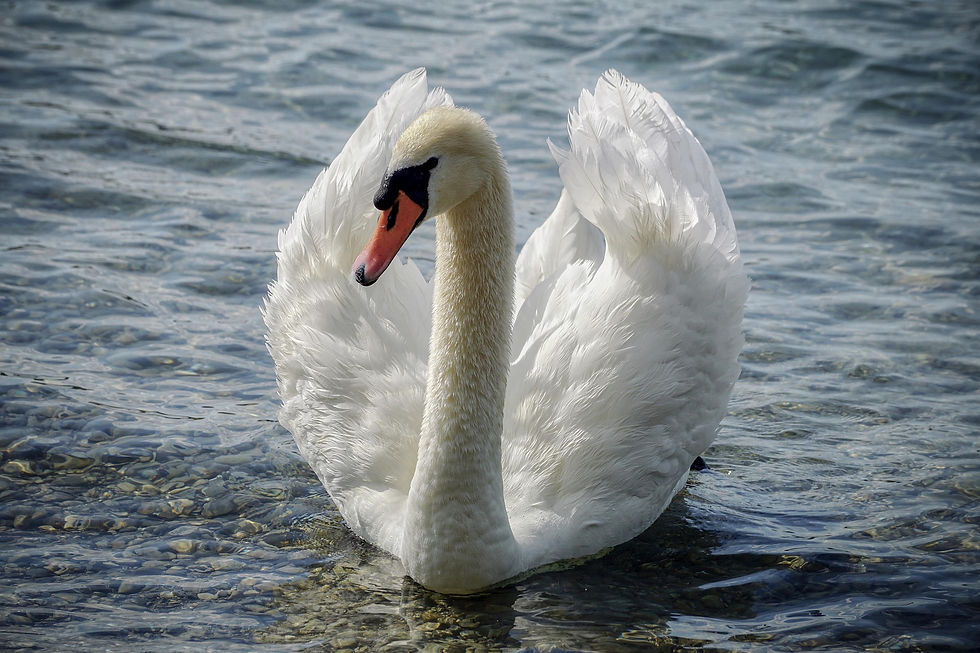
When you think of a swan, you might picture a beautiful white bird gliding effortlessly across a peaceful pond. With their long necks, elegant posture, and storybook appearance, swans have become symbols of beauty, love, and grace throughout history.
But beneath their serene exterior lies a fascinating world filled with remarkable behaviors, impressive abilities, and a few surprises…
Not All Swans Are White

While the familiar European mute swan (Cygnus olor) is known for its brilliant white feathers, not all swans look like this.

Native to Australia, the black swan (Cygnus atratus) sports striking black plumage with bright red beaks.
In addition, South America is home to the black-necked swan (Cygnus melancoryphus), which features a white body contrasted by a dramatic black neck (shown right).
There are six species of swans (genus Cygnus) located across the world, each one with its own unique characteristics and habitats. Adult males are called cobs, and females are called pens.
Built for Life on the Water
Swans belong to the waterfowl family, which also includes geese and ducks. Because they have large webbed feet, they are excellent swimmers and can glide smoothly through lakes, rivers, ponds, and wetlands.
Even though they appear to float without effort, swans are constantly paddling beneath the surface of the water. Oils coat their feathers, helping to keep them dry and insulated, even in cold conditions.
They Can Fly Faster Than You Think

Despite their large size, swans are powerful fliers. Some species can reach speeds of 50 to 60 miles per hour when in flight. Migratory swans often travel hundreds or thousands of miles between wintering and breeding grounds.
Have you ever watched a swan take off? It is a spectacular sight! Because of their big bodies, they need a lengthy running start across the water before they are airborne.
Swans Often Mate for Life

Swans are often associated with romance. This is because they tend to form long-term partner bonds. Many swan species mate for life! They work together to build nests, protect their territory, and raise their young.
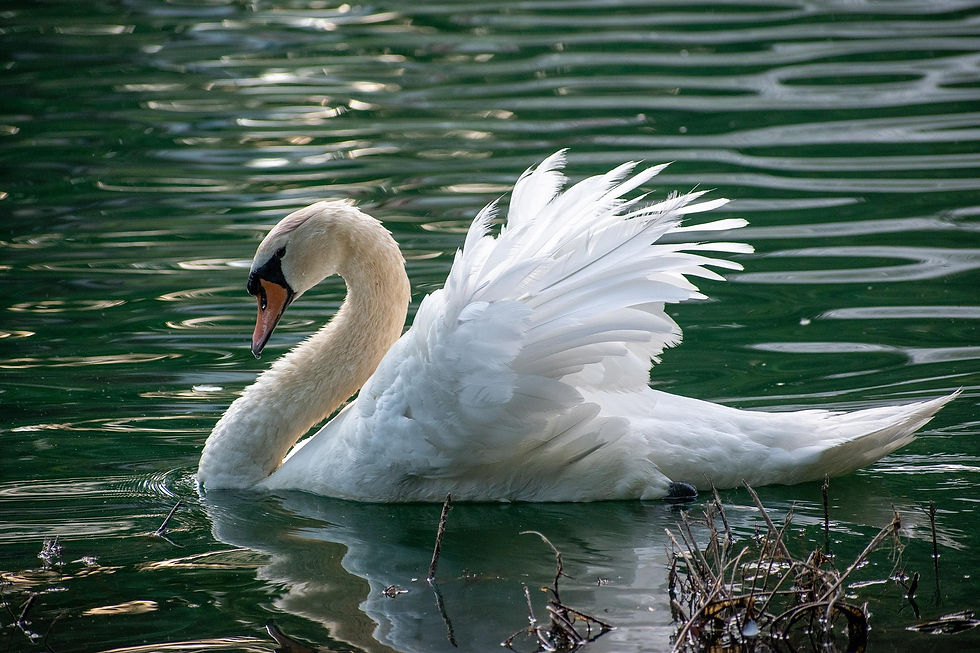
When two swans face each other and curve their necks inward, they can create the shape of a heart — a beautiful sight that has inspired countless works of photography, literature, and art.
Meet the Cygnets

Did you know that baby swans are called cygnets? Unlike their elegant parents, cygnets are typically born with fluffy brown or gray feathers. For protection and guidance, they stay close to their parents as they learn essential survival skills.

Adult swans are fiercely devoted and protective parents. If they perceive a threat, they will oftentimes hiss, flap their wings, or chase away an intruder. Thankfully, most swans prefer to avoid conflict and only want to keep their families safe — just like any other good parent.
It is also common to see cygnets riding on a parent’s back as they cross the water, safely tucked among the adult’s feathers.
Final Thoughts
As you can see, swans are much more than beautiful, elegant birds floating on a pond; They are skilled swimmers, strong fliers, devoted parents, and fascinating creatures with rich cultural significance.
Whether you are watching a family of cygnets paddle across a lake or admiring a graceful adult swan in flight, these magnificent birds remind us that God is full of wonder!
The next time you spot a swan, take a closer look — you might discover there is far more to these regal giants than meets the eye.
Swan Sources
Swan | bird species, migration & Lifespan | Britannica. Britannica. (n.d.). https://www.britannica.com/animal/swan
Swans: Facts, Threats, Habitat, and FAQs. IFAW. (n.d.). https://www.ifaw.org/animals/swans
11 animals that mate for life. (n.d.-a). https://www.treehugger.com/animals-that-mate-for-life-4869332
Author’s Bio

Isabella Boston is a freelance writer, researcher, and advocate with a passion for raising awareness about important social and environmental issues.
Through thoughtful, evidence-based articles, she seeks to educate readers about topics ranging from human trafficking prevention and victim advocacy to wildlife conservation and the protection of endangered species. Her work is driven by a belief that informed individuals can help create meaningful change for both people and God's planet.
Aside from being a writer, Isabella is a book & vintage fashion lover, a language enthusiast, and, most importantly, a woman of God in Christ Jesus!


Comments